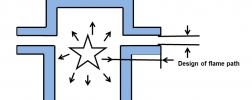

In order to be safe for use in the hazardous locations, pressure sensors that are suitable for use in that hazardous area need to comply with one of the many protection types available. A common route is to use a pressure sensor possessing the Ex-d protection type, …
Ex protection
Ex-d vs Ex-i … why should I care?
Ahmad Desuki | Know-howI was a freshly graduated mechanical engineer when I started my career in the maintenance department of a petrochemical plant. One of the many jobs that we needed to attend to was checking the status of the pressure transmitters that were installed on our production …
How to select an isolated barrier for an intrinsically safe pressure sensor
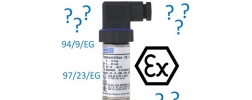
Stefan Heusel | Know-howIn Europe plants or machines used in hazardous areas must comply with the ATEX directive 94/9/EC. Therefore, the pressure sensors or other measuring instruments approved according to ATEX must be used only in conjunction with ATEX approved isolated barriers if they use …
Ex pressure sensors and transmitters for ATEX Zone 0, Zone 1 or Zone 2 – markings of pressure instruments for use in a hazardous area
Stefan Heusel | Know-howThe field of application or the suitability of a pressure sensor for a hazardous area is designated by the marking on the device. As a matter of principle, intrinsically safe pressure sensors marked Ex ia can be used in zone 0 (the "most dangerous" area), whereby …
Marking of pressure sensors and transmitters according to ATEX Guideline 94/9/EC – how to read the ATEX label on pressure sensors
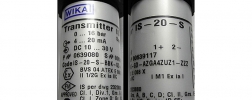
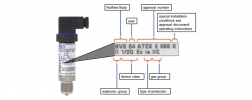
Stefan Heusel | PressureIf pressure sensors, pressure transmitters and other field equipment are used in the vicinity of flammable gases or dust, they may be subject to marking in accordance with the ATEX product guideline 94/9/EC. ATEX requires the type label of the sensor to include the …